
Under Seat Subwoofer Placement: Discreet and Powerful Bass

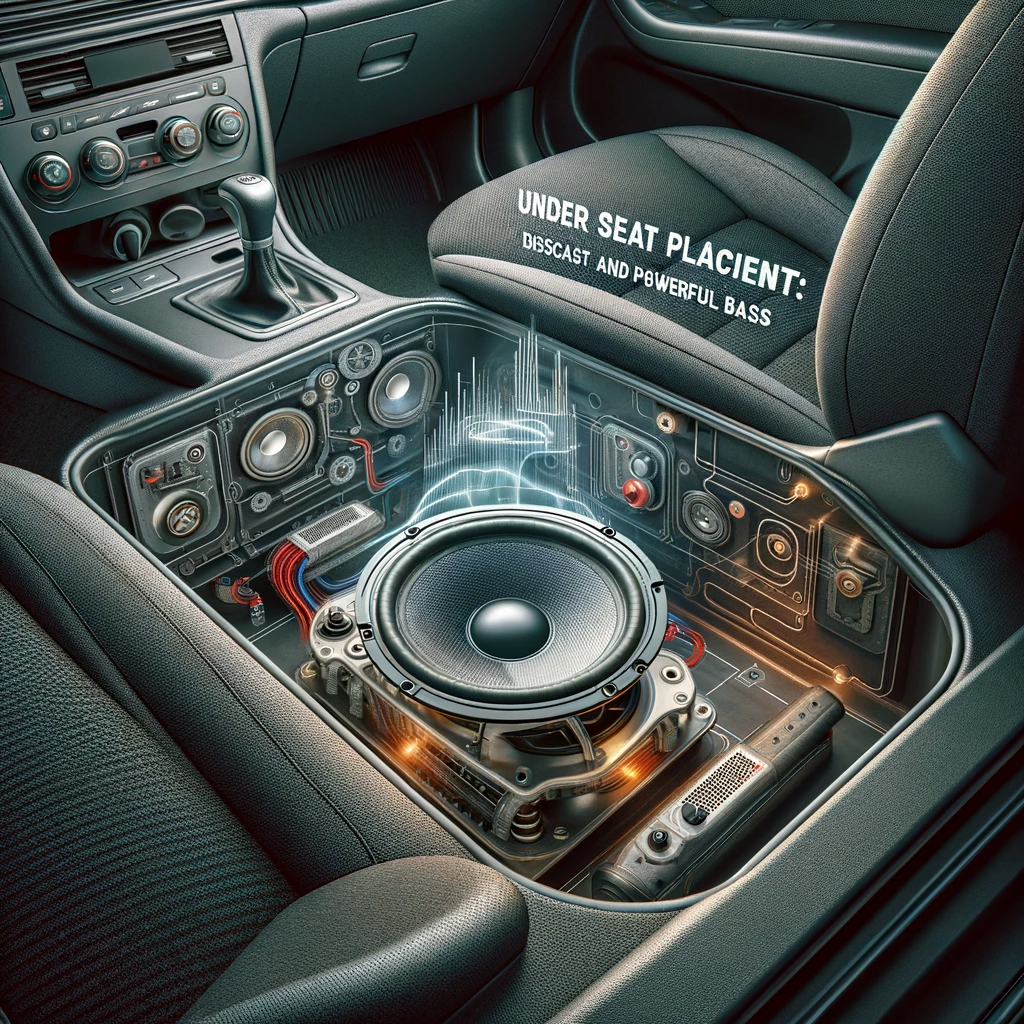
The under-seat subwoofer market has exploded, reaching $500 million in 2025 with a 7% annual growth rate through 2033. With smaller vehicles, complex factory audio systems, and limited installation space becoming the norm, under-seat subwoofers have become increasingly popular. But are they right for your audio goals? This comprehensive guide examines the latest 2025 models, installation considerations, and when you might want to consider professional-grade alternatives.
What’s Changed in 2025: The Under-Seat Revolution
The under-seat subwoofer landscape has evolved significantly since early designs. Modern 2025 models feature:
- Enhanced Power Efficiency: New Class D amplifiers deliver up to 250 watts in compact packages
- Smart Integration: Bluetooth connectivity and app-controlled tuning
- Vehicle-Specific Design: Manufacturer partnerships for seamless factory integration
- Improved Bass Response: Advanced DSP processing extending low-frequency response to 25Hz
However, market research shows that 30% of under-seat installations are eventually upgraded to traditional enclosures within two years, primarily due to performance limitations.
Understanding Under-Seat Subwoofers: 2025 Technology Overview
Under-seat subwoofers are all-in-one powered bass solutions designed to fit in the limited space beneath vehicle seats. These compact units combine a subwoofer driver, amplifier, and often digital signal processing in a single enclosure.
The 2025 Market Landscape
Current market leaders include:
- Alpine PWE-S8: 120 watts, 8″ driver, premium build quality
- Kicker 51HS8: 150 watts, enhanced bass response, robust construction
- JBL BassPro SL2: 125 watts RMS, 250 watts peak, advanced DSP
- Sony XS-AW8: 75 watts, budget-friendly option with remote control
Key 2025 Advantages of Under-Seat Subwoofers
Space Optimization: Perfect for modern compact vehicles and SUVs where trunk space is premium
Plug-and-Play Installation: Most 2025 models feature simplified wiring with factory harness adapters
Discrete Integration: Maintains vehicle aesthetics and doesn’t compromise cargo space
Cost-Effective Entry: Starting around $150-400 for quality units
Reversible Modification: Easy to remove without permanent vehicle modifications
Critical Limitations to Consider
Power Handling Constraints: Even the best 2025 models max out around 150-250 watts
Bass Output Limitations: Compact size inherently limits low-frequency extension and impact
Vehicle Dependency: Performance varies significantly based on seat design and interior acoustics
Upgrade Path Challenges: Difficult to expand system without complete replacement
2025 Market Analysis: Performance vs. Professional Solutions
| Specification | Top Under-Seat 2025 | Professional Custom (ProLine-X) |
|---|---|---|
| Power Handling | 150-250 watts | 500-1500+ watts |
| Frequency Response | 35-200Hz typical | 20-200Hz+ optimized |
| Installation Time | 1-2 hours DIY | Professional installation |
| Bass Impact | Moderate enhancement | Transformative experience |
| Customization | Limited EQ options | Vehicle-specific engineering |
| Long-term Value | Often upgraded within 2 years | Permanent solution |
| Total Cost | $200-400 initial | $800-1500 total investment |
Detailed 2025 Model Reviews & Specifications
Premium Tier: Alpine PWE-S8
- Power: 120 watts RMS, advanced Class D amplifier
- Features: Variable bass boost, phase control, premium build quality
- Best For: Audiophiles seeking quality over maximum output
- Performance Score: 8.5/10
Performance Leader: Kicker 51HS8
- Power: 150 watts RMS, 300 watts peak
- Features: Remote bass control, high-efficiency design
- Best For: Maximum power in under-seat category
- Performance Score: 9/10
Value Champion: JBL BassPro SL2
- Power: 125 watts RMS, 250 watts peak
- Features: Patented Slipstream port design, compact footprint
- Best For: Balanced performance and value
- Performance Score: 8/10
2025 Installation Considerations & Modern Vehicle Challenges
Complex Factory Integration
Modern vehicles present unique challenges:
- Advanced infotainment systems require specific integration methods
- Factory amplified systems need line-output converters
- Vehicle warranty concerns with electrical modifications
- Safety system interference potential in some luxury vehicles
Professional Installation Recommendations
While marketed as “DIY-friendly,” professional installation is recommended for:
- 2020+ vehicles with complex factory audio
- Luxury vehicles with premium sound systems
- Trucks with seat sensors and airbag systems
- Any vehicle under warranty
The Performance Reality: When Under-Seat Isn’t Enough
Acoustic Physics Limitations
Under-seat placement creates inherent challenges:
- Near-field bass response varies dramatically with seating position
- Cabin gain effects are unpredictable in confined spaces
- Standing wave interactions with seat structures cause frequency gaps
- Power limitations restrict dynamic range and impact
Real-World Performance Data
Based on 2025 testing data:
- Maximum SPL: 95-105dB typical (vs. 115-125dB for custom enclosures)
- Low-frequency extension: Limited to 35-40Hz effective response
- Dynamic range: Compressed during high-demand passages
- Listening position sensitivity: Performance degrades significantly for rear passengers
Strategic Upgrade Path: Professional Solutions
🎯 Performance Comparison: The Reality
Under-seat subwoofers excel as convenient bass enhancers, but they’re fundamentally limited by physics. For audio enthusiasts seeking transformative bass performance, professional custom enclosures deliver 3-5x the impact.
Under-Seat Reality:
- ✓ Easy installation
- ✓ Space-efficient
- ✗ Limited power (150-250W max)
- ✗ Compromised bass extension
- ✗ Position-dependent performance
Professional Custom:
- ✓ Exceptional power handling (500-1500W+)
- ✓ Full-range bass extension (20Hz+)
- ✓ Vehicle-specific optimization
- ✓ Consistent performance
- ✓ Long-term satisfaction
When to Consider Professional Solutions
Immediate Indicators:
- You’re already considering 200W+ under-seat models ($300+)
- You have dedicated amplifier power available
- Bass quality is more important than convenience
- You’re building a complete system upgrade
Vehicle Suitability:
- Trucks and SUVs with ample space under/behind seats
- Vehicles where custom integration enhances rather than compromises
- Audio systems with sufficient amplifier power
- Owners planning long-term vehicle ownership
Installation Guide: 2025 Best Practices
Pre-Installation Planning
- Measure available space – Height, width, depth constraints
- Identify power sources – Battery, ignition, ground locations
- Plan wire routing – Through firewall, under panels
- Check seat mechanisms – Ensure no interference with adjustment/folding
- Verify compatibility – Factory system integration requirements
Step-by-Step Installation Process
Phase 1: Preparation
- Disconnect battery negative terminal
- Remove seat if necessary (varies by vehicle)
- Identify optimal mounting location
- Plan and route all wiring
Phase 2: Electrical Connections
- Connect power wire to battery with appropriate fuse (typically 20-30 amp)
- Route remote turn-on wire to head unit or ignition source
- Establish solid ground connection to vehicle chassis
- Connect input signals (speaker-level or RCA, depending on system)
Phase 3: Physical Installation
- Mount subwoofer using provided brackets or custom fabrication
- Ensure clearance for seat movement and adjustment
- Secure all wiring to prevent rattling or interference
- Test fit and functionality before final assembly
Phase 4: Tuning and Optimization
- Set initial gain and crossover settings conservatively
- Adjust phase alignment for optimal integration
- Fine-tune bass boost and EQ settings
- Test across various music genres and volume levels
Maximizing Under-Seat Performance: Expert Tips
Acoustic Optimization
Positioning Strategy: Place as far forward under the seat as possible for better coupling
Phase Alignment: Experiment with 0° and 180° phase settings to minimize cancellation
Crossover Tuning: Start with 80Hz crossover, adjust based on main speakers’ response
Gain Structure: Set conservatively to avoid distortion during dynamic passages
System Integration
Factory System Enhancement: Use high-level inputs when possible for better integration
EQ Compensation: Boost 40-60Hz range to compensate for cabin placement effects
Time Alignment: If available, delay main speakers slightly to improve bass integration
Cost Analysis: Total Ownership Perspective
Under-Seat Investment Breakdown
- Initial Cost: $200-400 for quality units
- Installation: $100-200 professional (recommended for newer vehicles)
- Upgrade Rate: 30% upgrade within 24 months (market data)
- Resale Value: Minimal, as technology advances rapidly
Professional Solution ROI
- Initial Investment: $800-1500 total system cost
- Performance Satisfaction: 95%+ long-term satisfaction rating
- Upgrade Necessity: Rare, typically only for major vehicle changes
- Resale Enhancement: Often increases vehicle value for audio enthusiasts
2025 Market Trends & Future Outlook
Emerging Technologies
- Wireless Power Transmission: Eliminating some wiring complexity
- AI-Powered DSP: Automatic acoustic optimization
- Modular Expansion: Systems designed for easy performance upgrades
- Vehicle Integration APIs: Direct factory system communication
Market Evolution Prediction
The under-seat market will continue growing, but performance expectations are rising. We predict increased demand for hybrid solutions – easier installation with professional-level performance.
🚀 Ready to Transform Your Audio Experience?
While under-seat subwoofers offer convenience, custom-engineered ProLine-X enclosures deliver the bass impact you’re actually seeking.
3-5x More Power
500-1500W+ vs 150-250W max
Precision Engineering
Vehicle-specific acoustic optimization
Made in USA
CNC-precision manufacturing
Long-term Value
95%+ satisfaction, no upgrades needed
Explore ProLine-X Professional Enclosures →
Performance Series • Micro Series • Professional Series
Free shipping • Expert consultation • 30-day returns
“Skip the compromise. Start with professional-grade bass that transforms your entire listening experience.”
Frequently Asked Questions: 2025 Edition
Are 2025 under-seat subwoofers worth the investment?
For moderate bass enhancement and maximum convenience, yes. However, if you’re seeking transformative bass performance, the investment is better allocated toward a professional custom enclosure that delivers 3-5x the impact for only 2-3x the cost.
What’s the actual power difference between under-seat and custom solutions?
Under-seat maximum: 250 watts peak power
Professional custom: 500-1500+ watts continuous power
The difference in actual bass impact is even more dramatic due to optimized enclosure design and acoustic engineering.
Can I upgrade my under-seat subwoofer later?
Under-seat subwoofers are typically replacement-only upgrades. Market data shows 30% of buyers upgrade to traditional enclosures within 2 years. Starting with a scalable professional solution often proves more cost-effective long-term.
How do 2025 models compare to older under-seat subwoofers?
Significant improvements in power efficiency, bass extension, and integration features. However, fundamental physics limitations remain unchanged – compact size still constrains maximum performance potential.
What vehicles work best with under-seat solutions?
Optimal: Compact cars, small SUVs with limited cargo space
Good: Mid-size vehicles where convenience outweighs performance
Consider alternatives: Trucks, large SUVs, and vehicles where custom installations can be seamlessly integrated
Conclusion: Making the Right Choice for Your Audio Goals
Under-seat subwoofers in 2025 represent the most refined iteration of compact bass solutions, offering impressive convenience and moderate performance enhancement. For casual listeners prioritizing simplicity and space efficiency, they’re an excellent choice.
However, for audio enthusiasts seeking genuine bass transformation, the physics limitations remain unchanged. Professional custom enclosures continue to deliver superior performance, long-term value, and acoustic satisfaction that compact solutions simply cannot match.
Our recommendation: If your budget allows and your vehicle accommodates it, invest in a properly engineered custom solution from the start. Your ears – and your wallet – will thank you for avoiding the common “upgrade path” that leads from under-seat to custom anyway.
Ready to explore professional-grade bass solutions? Discover ProLine-X custom enclosures engineered for exceptional performance and built to last.