
Subwoofer Displacement: What You Need to Know

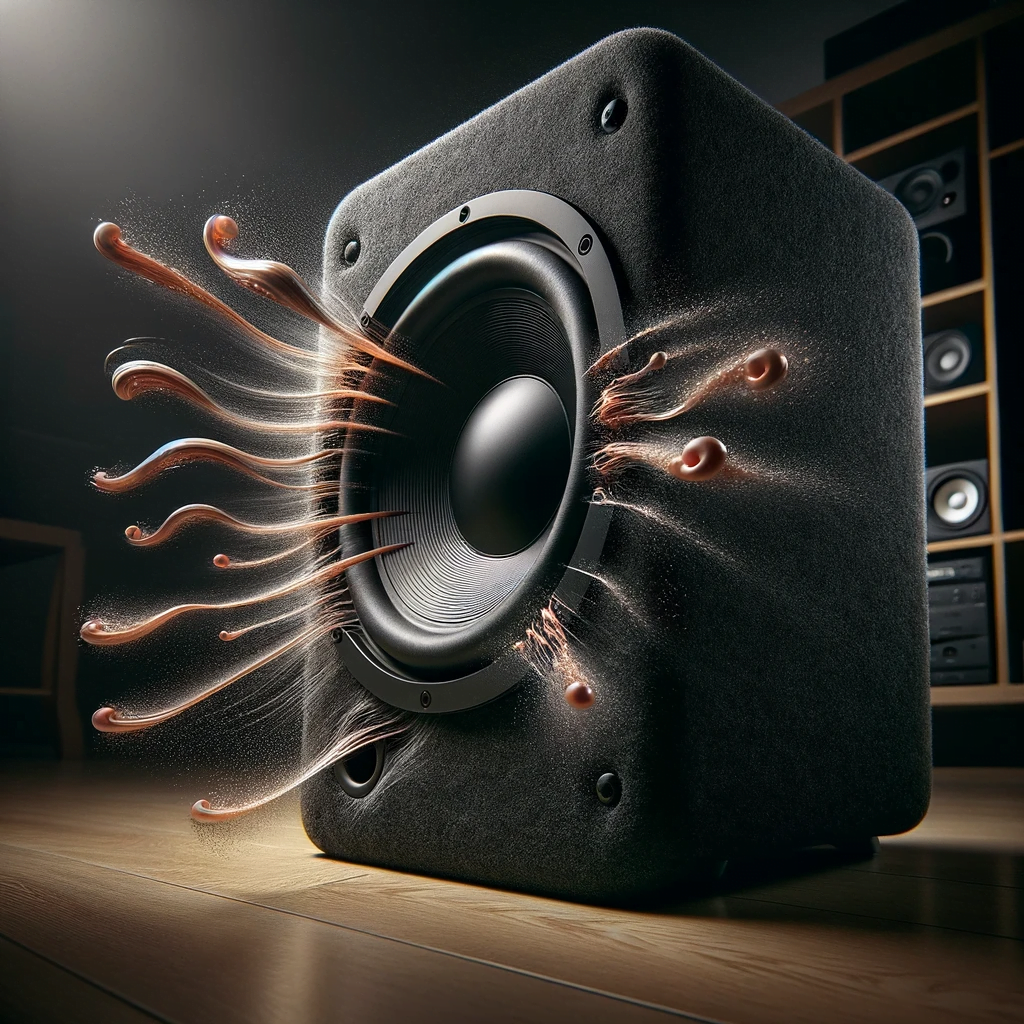
Subwoofer Displacement: The Definitive Guide
Master the critical calculations that separate amateur installations from professional-grade bass systems. Updated for 2025 with industry-leading insights.
Why Subwoofer Displacement Matters in 2025
In the rapidly evolving $750M subwoofer market, understanding displacement calculations has become crucial for achieving optimal performance. Modern high-excursion drivers and compact enclosure designs demand precise volume calculations that account for every cubic inch.
Quick Answer: How to Calculate Subwoofer Displacement
Formula: Displacement = π × (Diameter/2)² × Depth
Measure the subwoofer’s physical dimensions (diameter and mounting depth), apply the volume formula, then subtract this displacement from your total enclosure volume for accurate tuning calculations.
Understanding Subwoofer Displacement Fundamentals
What Is Subwoofer Displacement?
Subwoofer displacement refers to the physical volume occupied by the driver’s motor structure, magnet assembly, and basket within the enclosure. This volume reduces the effective internal airspace available for acoustic tuning.
Modern high-performance drivers can displace 0.05 to 0.3 cubic feet or more, making accurate calculations essential for proper enclosure design.
Key Components That Create Displacement:
- Magnet structure and motor assembly
- Basket and frame geometry
- Voice coil and suspension system
- Internal mounting hardware
Why Displacement Calculations Matter
Ignoring subwoofer displacement leads to significant performance degradation. When enclosure volume is overestimated, the result is improper tuning, reduced output, and compromised frequency response.
Common Consequences of Ignoring Displacement:
- • Tuning frequency shifts of 5-15 Hz
- • Reduced bass output and clarity
- • Increased distortion at higher volumes
- • Suboptimal impedance matching
Professional Displacement Calculation Methods
Water Displacement Method
The most accurate method for measuring actual displacement volume.
Required Tools:
- • Large measuring container
- • Plastic bag or wrap
- • Water
- • Measuring cup
Process:
- 1. Wrap subwoofer in waterproof material
- 2. Submerge in measured water container
- 3. Measure water displacement volume
- 4. Convert to cubic feet if needed
Mathematical Calculation
Estimate displacement using physical measurements and geometric formulas.
Formula:
V = π × r² × h
Where V=volume, r=radius, h=depth
Measurements Needed:
- • Frame diameter
- • Mounting depth
- • Magnet diameter
- • Overall depth
Manufacturer Specifications
The most convenient method using published driver specifications.
Where to Find:
- • Driver specification sheets
- • Manufacturer websites
- • Technical documentation
- • Thiele-Small parameter lists
Proline-X Advantage: All our enclosures account for displacement calculations with industry-leading precision.
Displacement Impact on Enclosure Performance
Understanding how different displacement volumes affect tuning frequency and overall performance is crucial for optimal enclosure design.
Small Drivers (8-10″)
Typically 0.05-0.15 ft³ displacement
Medium Drivers (12-15″)
Typically 0.15-0.25 ft³ displacement
Large Drivers (18″+)
Typically 0.25-0.45 ft³ displacement
Critical Factors Influencing Subwoofer Displacement
Driver Design and Construction
Magnet Structure Impact:
- Ferrite Magnets: Larger, higher displacement volume
- Neodymium Magnets: Smaller, reduced displacement
- Dual vs Single Stacks: Significant volume differences
Basket and Frame Design:
- Cast vs Stamped: Different volume profiles
- Vented vs Solid: Airflow considerations
- Mounting Depth: Critical installation factor
Pro Tip: Modern high-excursion drivers often have larger displacement volumes due to extended motor structures. Always verify specifications before finalizing enclosure designs.
Enclosure Size and Volume Relationships
The relationship between enclosure volume and displacement becomes more critical as box sizes decrease. Small enclosures are significantly more affected by displacement calculations.
Large Enclosures (2+ ft³):
- • Displacement impact: 5-15%
- • More forgiving tuning tolerance
- • Suitable for multiple driver configurations
Compact Enclosures (<1 ft³):
- • Displacement impact: 20-40%
- • Critical precision required
- • Limited driver compatibility
Enclosure Material and Construction Impact
Different enclosure materials affect not only structural integrity but also the practical considerations of displacement calculations.
MDF Construction
Precise volume calculations, consistent material thickness, excellent acoustic properties.
Fiberglass Molding
Complex geometry requires advanced displacement calculations, custom fitting considerations.
Composite Materials
Lightweight construction with minimal impact on overall displacement calculations.
Real-World Displacement Applications
Automotive Installation Challenges
Vehicle-specific installations present unique displacement challenges due to space constraints and mounting limitations.
Under-Seat Applications
Limited height clearance makes displacement calculations critical. Every cubic inch matters for optimal tuning.
Behind-Seat Mounting
Larger available volume allows for more flexibility, but proper calculations ensure maximum performance.
Trunk Integration
Custom fabrication possibilities require precise displacement modeling for optimal results.
Professional vs DIY Considerations
Professional Installation Advantages:
- Precision measurement tools and techniques
- Access to manufacturer displacement data
- Experience with complex geometries
- Quality assurance and warranty coverage
DIY Success Factors:
- Accurate measurement capabilities
- Access to reliable specification data
- Understanding of acoustic principles
- Patience for iterative testing
Proline-X Quality Assurance: Every enclosure undergoes precision displacement verification with a comprehensive 2-year warranty, ensuring optimal performance from day one.
Common Displacement Mistakes and Professional Solutions
Critical Errors to Avoid
Ignoring Displacement Entirely
The most common error – treating enclosure volume as if the driver occupies no space.
Result: Tuning frequency errors, reduced output, poor performance
Using Generic Displacement Values
Assuming all 12″ drivers have the same displacement regardless of design.
Result: Inaccurate calculations, suboptimal tuning
Miscalculating Port Displacement
Forgetting that ports also displace volume within the enclosure.
Result: Double tuning errors, compromised bass response
Inadequate Measurement Precision
Using rough estimates rather than precise measurements for critical calculations.
Result: Cumulative errors affecting overall system performance
Professional Solutions and Best Practices
Precision Measurement Protocol
- • Use calibrated measuring tools
- • Verify manufacturer specifications
- • Cross-reference multiple sources
- • Document all measurements
- • Account for mounting hardware
Comprehensive Volume Accounting
- • Calculate driver displacement
- • Include port volume impact
- • Account for internal bracing
- • Consider stuffing material volume
- • Verify final calculations
Quality Assurance Testing
- • Measure actual tuning frequency
- • Verify impedance characteristics
- • Test frequency response
- • Validate power handling
- • Document performance results
Proline-X Engineering Excellence
Every Proline-X enclosure incorporates precision displacement calculations with industry-leading engineering standards.
Precision Engineering
Advanced CAD modeling ensures every cubic inch is optimized for maximum performance.
2-Year Warranty
Comprehensive warranty coverage backed by rigorous quality assurance testing.
Made in USA
Domestic manufacturing ensures consistent quality and rapid customer support.
Advanced Topics and Related Learning
Explore Related Engineering Concepts
Enclosure Engineering Hub
Master sealed vs ported design, tuning frequency optimization, and advanced enclosure calculations.
Subwoofer Fundamentals Hub
Comprehensive foundation covering RMS vs peak watts, impedance matching, and driver specifications.
Installation Guides Hub
Step-by-step installation techniques, placement optimization, and troubleshooting guides.
Recommended Next Steps
Building Your Knowledge Base:
-
1
Master Displacement Calculations
Practice with various driver types and enclosure sizes
-
2
Study Enclosure Engineering
Learn how displacement affects tuning and frequency response
-
3
Apply Installation Techniques
Implement proper mounting and placement strategies
-
4
Explore Vehicle-Specific Solutions
Discover applications for your specific truck or SUV
Pro Tip: Start with our comprehensive Truck Subwoofer Guide to see displacement principles applied to real-world vehicle installations.
Ready to Apply Your Displacement Knowledge?
Transform your understanding into superior bass performance with precision-engineered Proline-X enclosures or explore our complete range of educational resources.
All Proline-X enclosures backed by our comprehensive 2-year warranty • Made in USA • Free shipping available